
AI Dungeon Master & RPG Fablia
Applogy StudioRole Playing
4.5386.00 Reviews
- Version
- 5.2.2
- Installs
- 100.00K
- Age Rating
- Everyone
Screenshots
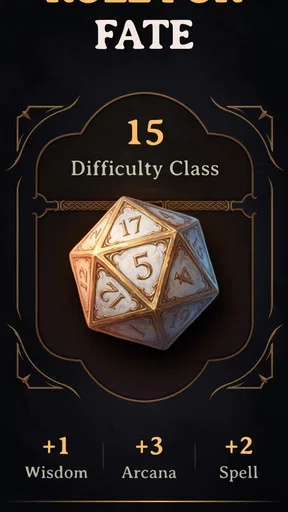
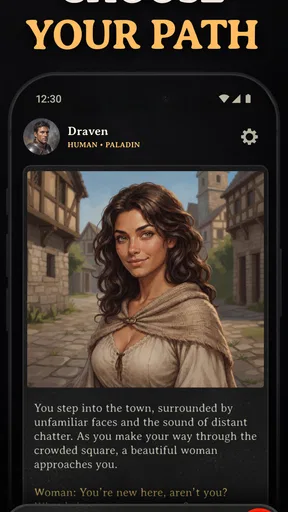

Our Review of AI Dungeon Master & RPG Fablia
 Analysis by Appyee
I went into AI Dungeon Master & RPG Fablia expecting a role-playing game with a fixed campaign, familiar quests, and a clear route through a fantasy world. That is not really its appeal. This is a game built around an AI Dungeon Master, where the main attraction is shaping a story through your own hero and decisions rather than following a single prepared adventure from beginning to end.
That difference matters. If you enjoy inventing characters, taking unexpected turns, and treating a game session like a conversation with a storyteller, Fablia offers a more flexible experience than a traditional mobile RPG. If you prefer carefully balanced combat, collectible heroes, or a polished visual campaign with a definite ending, I would be more cautious. Its strongest moments come from imagination and improvisation, not from a large collection of conventional game systems.
Applogy Studio presents it as a free role-playing game for everyone, and the current version is 2.6.6. The game has reached a 4.5 average from around 500 ratings, with over 10 thousand installs, which gives it the feel of a focused, still-growing project rather than a massive mainstream release. I found that useful context: this is best approached as an experimental storytelling tool with game elements, not as a replacement for a major console-style fantasy adventure.
How the AI-led fantasy experience works in practice
I’d focus this section on the practical rhythm of play: shaping a hero, stating one clear intention, and responding to the Dungeon Master’s next turn. I also want to show why treating a failed roll as a new story complication can keep a session moving, rather than turning it into a hunt for a perfect command.
Building a hero before the story takes shape
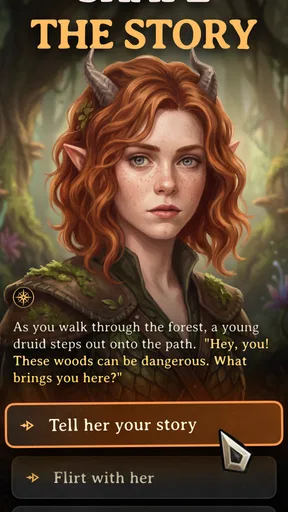
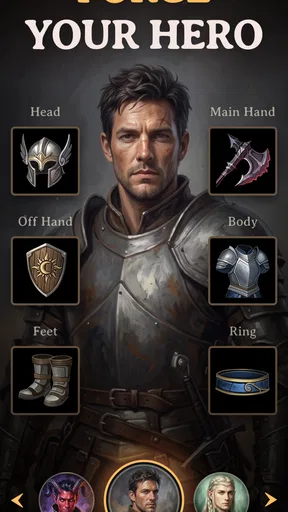
The central routine is easy to understand. You create a hero, make choices, and let the Dungeon Master respond. The important part is that your character is not merely a skin placed over a predetermined campaign. Your decisions are meant to define the direction of the story, so the same starting idea can lead to a different kind of adventure depending on how you role-play.
I recommend creating a character with a clear motivation rather than only choosing a name and a broad fantasy identity. A hero who wants to recover a family heirloom, clear an accusation, or earn a place in a dangerous guild gives the storytelling engine something practical to work with. That small amount of preparation makes the early scenes feel more connected and gives you a reason to reject some opportunities while pursuing others.
The dice element also helps give decisions a sense of risk. In a normal interactive story, you may wonder whether an action succeeds because the writer wants it to. Here, the idea of rolling creates a little uncertainty. I enjoyed that most when I attempted something slightly beyond my character’s obvious abilities. A failure can become part of the story instead of simply feeling like a game-over screen.
There is a trade-off, though. An AI-led adventure depends heavily on how clearly you express what you want to do. A vague input can produce a vague scene, while a specific action gives the Dungeon Master more material to build on. I found that writing one meaningful action at a time worked better than listing five unrelated plans in one message.
Why the open-ended format feels different from ordinary RPGs
Most mobile role-playing games guide you through a chain of missions. You may choose dialogue options, but the major events remain under the developer’s control. Fablia reverses that balance. The developer supplies the framework, while the player supplies much more of the direction and tone.
That makes it particularly appealing for short creative sessions. I can imagine opening it during a commute, deciding to investigate a suspicious caravan, and playing until I reach a natural pause. I do not need to remember a complicated combat rotation or manage a large inventory before enjoying the next scene. The game’s value is in the immediate question of what happens after my choice.
It also works well for players who enjoy tabletop role-playing but do not have a group available. An AI Dungeon Master cannot fully replace the timing, humour, and shared imagination of human players, but it removes the biggest practical obstacle: finding people who are free at the same time and willing to run a campaign.
At the same time, people who want a social experience should understand the compromise. The interaction is centred on the player and the AI narrator. Those who enjoy party banter, cooperative tactics, or a persistent online community will probably find a conventional multiplayer RPG more satisfying.
What the current version suggests about the game’s direction
The presence of version 2.6.6 suggests that Fablia has moved beyond an initial prototype and is being maintained as an ongoing product. I would not treat the version number alone as proof of a particular feature or major redesign, but it does make the current build the sensible one to evaluate. Anyone returning after an earlier experience should update before judging the game, because AI-driven products can feel noticeably different as their surrounding app systems evolve.
For existing users, the most important effect of a maintained version is continuity. A story-based game built around generated responses benefits when the basic flow remains dependable: starting a character, making a choice, rolling when appropriate, and continuing the narrative without unnecessary friction. I would still keep important story ideas in my own notes. That is not because the game is unsuitable for long campaigns, but because personal notes make it easier to resume a favourite character or recreate a good premise if I decide to begin again.
The current release also makes Fablia easier to recommend as a casual experiment. I would not tell a friend to invest weeks immediately. I would suggest trying a compact premise first, such as a courier carrying a forbidden letter or a novice mage investigating a locked observatory. After a few sessions, it becomes much clearer whether the AI’s style matches the kind of storytelling that person enjoys.
Small techniques that improve the quality of a session
My first practical tip is to establish the tone early. Tell the Dungeon Master whether you want a serious quest, light comedy, mystery, or a darker survival story. Without that direction, the adventure may drift between moods. A short instruction at the beginning can save a lot of correction later.
Second, give your hero a limitation. A character who is excellent at everything leaves fewer interesting decisions. A brave fighter who cannot read ancient writing, or a clever thief who dislikes violence, creates natural problems for the story. When a challenge exposes that weakness, the resulting choice feels more personal than a simple success check.
Third, treat failed rolls as prompts rather than punishments. If an attempt goes badly, I would avoid immediately trying the same action again. Instead, ask what new problem the failure creates. Perhaps the guard becomes suspicious, the magical device activates incorrectly, or an ally loses confidence. This approach turns an unlucky result into a branch of the adventure and helps prevent the session from becoming a repetitive search for the one correct command.
A fourth useful habit is to separate action from intention. “I open the door” is clear, but “I open the door because I suspect the missing scholar is inside, while keeping my hand near my knife” gives the narrator more context. That does not guarantee a better response every time, yet it makes the character feel more consistent and gives the story a stronger basis for consequences.
Where the game fits into an everyday routine
Fablia suits a particular kind of spare time: long enough to imagine a scene, but not necessarily long enough for a full traditional RPG mission. I could use it after dinner for a short chapter, during a waiting period, or as a creative break when I want interaction rather than passive reading. The lack of a fixed campaign route means I can stop after resolving a small problem instead of feeling forced to complete a lengthy level.
It can also be useful for people who enjoy writing but struggle with a blank page. Rather than composing an entire fantasy story alone, I can introduce a character and react to developments. The game supplies resistance and surprises, while I decide what kind of person the hero becomes. That makes it closer to collaborative improvisation than to reading a novel.
Parents should still consider the difference between an Everyone age label and the unpredictable nature of generated fantasy storytelling. The rating makes the game broadly accessible, but a flexible narrative system can move in directions a child may not expect. I would personally guide younger players toward simple premises and stay involved if the game is being used as a family activity.
Free access and the question of spending
The game is free to start, which lowers the barrier to testing its unusual format. That is important here because no description can tell you whether you enjoy AI-guided role-playing. The appeal is personal: some players will love the freedom, while others will quickly miss the structure of a conventional campaign.
There are in-app purchases ranging from $2.99 to $999.99 per item. That is a very wide range, so I would approach the purchase screen carefully and avoid assuming that paying is necessary to understand the basic experience. Before spending anything, I would play enough to answer three questions: Do I enjoy writing my own actions? Do the responses keep me interested? Do I prefer this format to a standard quest-based game?
This is also where Fablia differs from a tabletop session. With friends, the cost is usually connected to books, accessories, or a shared platform, while the main resource is everyone’s time. Here, the free entry is convenient, but optional purchases can change how you think about continuing. I would only spend if the game has already become a regular creative habit, not simply because a story has reached an exciting moment.
Limitations that affect the recommendation
The biggest limitation is the absence of guaranteed authorial control. A human Game Master can remember a group’s preferences, understand sarcasm, and deliberately plant clues several sessions before revealing them. An AI Dungeon Master can create surprising connections, but it may also lose the thread, misread an intention, or produce a development that feels less satisfying than the setup promised.
That means players need to be comfortable steering the experience. If a scene goes in an unhelpful direction, I would restate the goal plainly instead of waiting for the game to repair itself. This makes the player partly responsible for maintaining continuity. Someone looking for a perfectly authored plot may find that tiring.
The dice mechanic is another possible weakness. Randomness can make a story exciting, but it can also interrupt a carefully planned idea. If you want every important action to succeed because you are following a dramatic plan, the role-playing format may feel frustrating. I prefer to accept the occasional setback, but that is a matter of taste rather than a universal advantage.
There is also a limit to how much the game can replace traditional RPG progression. A conventional role-playing game often gives you a deep build, visible equipment choices, tactical encounters, and carefully tuned rewards. Fablia’s identity is more about narrative possibility. If your favourite part of the genre is optimising statistics or mastering a combat system, another game will probably offer more depth in that area.
Who should try it, and who should choose something else
I would recommend Fablia to curious fantasy fans who enjoy making decisions in their own words. It is a strong match for someone who has imagined a character but never had a group to play with, and for tabletop players who want a solo storytelling outlet between sessions. It is also a good fit for writers seeking prompts that react to their ideas instead of presenting a blank document.
I would be more hesitant to recommend it to anyone who wants a highly visual, tightly scripted adventure. Players who dislike improvising, correcting a narrator, or accepting unpredictable results may feel that the freedom creates extra work. Likewise, people mainly interested in competitive play, cooperative parties, or long-term character optimisation should look toward games designed around those priorities.
Compared with interactive fiction, Fablia offers more of a game-like feeling through the hero and dice, but it may not deliver the same carefully edited prose or branching precision as a fully authored title. Compared with tabletop RPGs, it is more convenient and always available, but less socially expressive. Compared with standard mobile RPGs, it gives the player more narrative control while providing less certainty about progression and balance.
What I would watch as the experience continues to evolve
For future updates, I would pay attention to how well the game preserves story continuity over longer adventures. Short scenes are where an AI narrator can feel most impressive, but sustained campaigns are the real test. I would want returning players to feel that their hero’s motives, relationships, and earlier choices continue to matter rather than becoming loose background details.
I would also watch the balance between freedom and guidance. New players benefit from examples, prompts, and clear explanations of how to phrase actions, while experienced players need room to create unusual situations. The best direction for Fablia would be helping beginners start quickly without making advanced players feel confined.
Finally, the purchase structure deserves attention from anyone planning regular use. Since optional items can range from a few dollars to very large amounts, clarity at the moment of spending matters. I would keep my first sessions free, decide whether the storytelling loop genuinely fits my habits, and only then consider any optional purchase.
My final take on the solo fantasy experiment
AI Dungeon Master & RPG Fablia is most successful when I stop expecting it to behave like a conventional mobile RPG. Its real strength is the invitation to bring my own character, motives, and decisions to a fantasy world that can respond in unexpected ways. The dice add tension, while the open-ended format makes even a short session feel like the beginning of a personal tale.
It is not a flawless substitute for a human Game Master, a carefully written adventure, or a deep tactical role-playing game. The player has to guide the tone, accept occasional inconsistency, and decide whether an imperfect turn is worth developing rather than restarting. That extra responsibility is a weakness for some people, but it is also what gives the game its unusual charm.
For me, the best way to judge it is to create one focused hero and play a small story instead of promising myself a huge campaign. If I am still thinking about the character’s next decision after closing the app, the format has done its job. At no cost to begin, it is worth trying for anyone who wants a personal fantasy adventure built through choices rather than simply consumed from a script.
Privacy and Permissions
See what permissions an app requests and how it handles your data.
- Photos/Media/Files
- read the contents of your USB storage, modify or delete the contents of your USB storage
- Storage
- read the contents of your USB storage, modify or delete the contents of your USB storage
- Microphone
- record audio
- Other
- view network connections, full network access, change your audio settings, reorder running apps, control vibration, prevent device from sleeping, Google Play license check
Verdict
Strengths of AI Dungeon Master & RPG Fablia
- Creates imaginative RPG adventures from simple prompts.
- Supports flexible storytelling without requiring fixed rules.
- Useful for solo players seeking an always-available game master.
- Encourages creative character concepts and unexpected plot twists.
- Offers replay value through different choices and story directions.
Limitations of AI Dungeon Master & RPG Fablia
- AI-generated scenes may occasionally contradict earlier story details.
- Story quality can vary depending on the prompt and chosen setting.
- Some features or content may require an account or paid access.
- Long sessions may become repetitive without regular player guidance.
- Internet access may be needed for the full experience.
Similar Picks in This Category
View All
Hair Dye
CrazyLabs LTD4.4

Monster High™ Beauty Salon
CrazyLabs LTD4.5

Bus Simulator - Bus Games 3D
Jima Apps4.4

Flight Pilot: 3D Simulator
Wildlife Studios4.1


Super Stylist Fashion Makeover
CrazyLabs LTD4.4
Frequently Asked Questions
What is AI Dungeon Master & RPG Fablia?
AI Dungeon Master & RPG Fablia is an interactive role-playing game that uses artificial intelligence to create adventures, conversations, characters, and story events as you play. Instead of following one fixed storyline, you can describe your actions and influence the direction of the campaign. It is designed for players who enjoy imaginative storytelling, exploration, fantasy scenarios, and flexible choices rather than strictly scripted gameplay.
How does gameplay work in AI Dungeon Master & RPG Fablia?
Gameplay generally revolves around interacting with an AI-powered dungeon master that presents situations, controls non-player characters, and reacts to your decisions. You may choose from suggested actions or write your own responses, allowing the adventure to develop in unexpected ways. The experience is more focused on narrative freedom and role-playing than traditional combat systems, puzzles, or predetermined missions.
Do I need an internet connection to play AI Dungeon Master & RPG Fablia?
An internet connection is typically required because the application needs to communicate with its AI systems to generate story responses and continue the adventure. Offline play may be limited or unavailable, depending on the version and device. For the smoothest experience, use a stable Wi-Fi or mobile data connection, especially during longer sessions where frequent story interactions are required.
Is AI Dungeon Master & RPG Fablia free to download and use?
The app may be available to download at no initial cost, but some features, story options, usage limits, or premium content can depend on the current subscription and in-app purchase model. Before starting a long campaign, check the store listing for pricing, trial conditions, and recurring subscription details. Availability of specific features may also vary between Android and iOS.
Is AI Dungeon Master & RPG Fablia suitable for children?
Parents should review the app’s official age rating and privacy information before allowing children to use it. Since the story is generated dynamically from player prompts, the content may vary and can sometimes become more mature, intense, or unpredictable than a conventional game. Younger players should use appropriate safety settings where available and, ideally, play with parental supervision.
Play our best games!


